
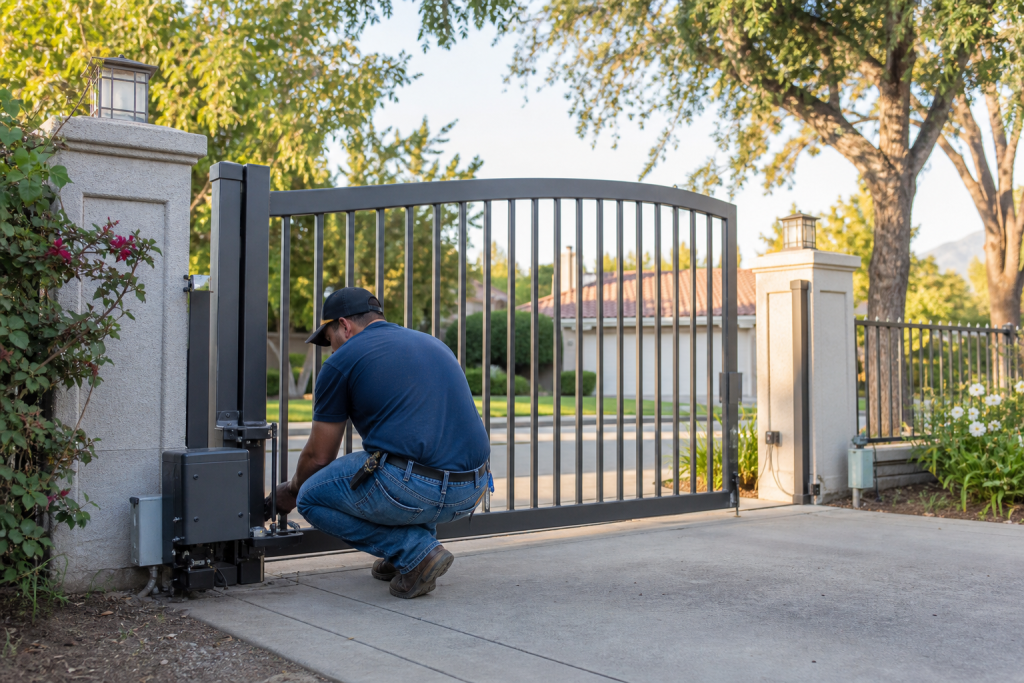
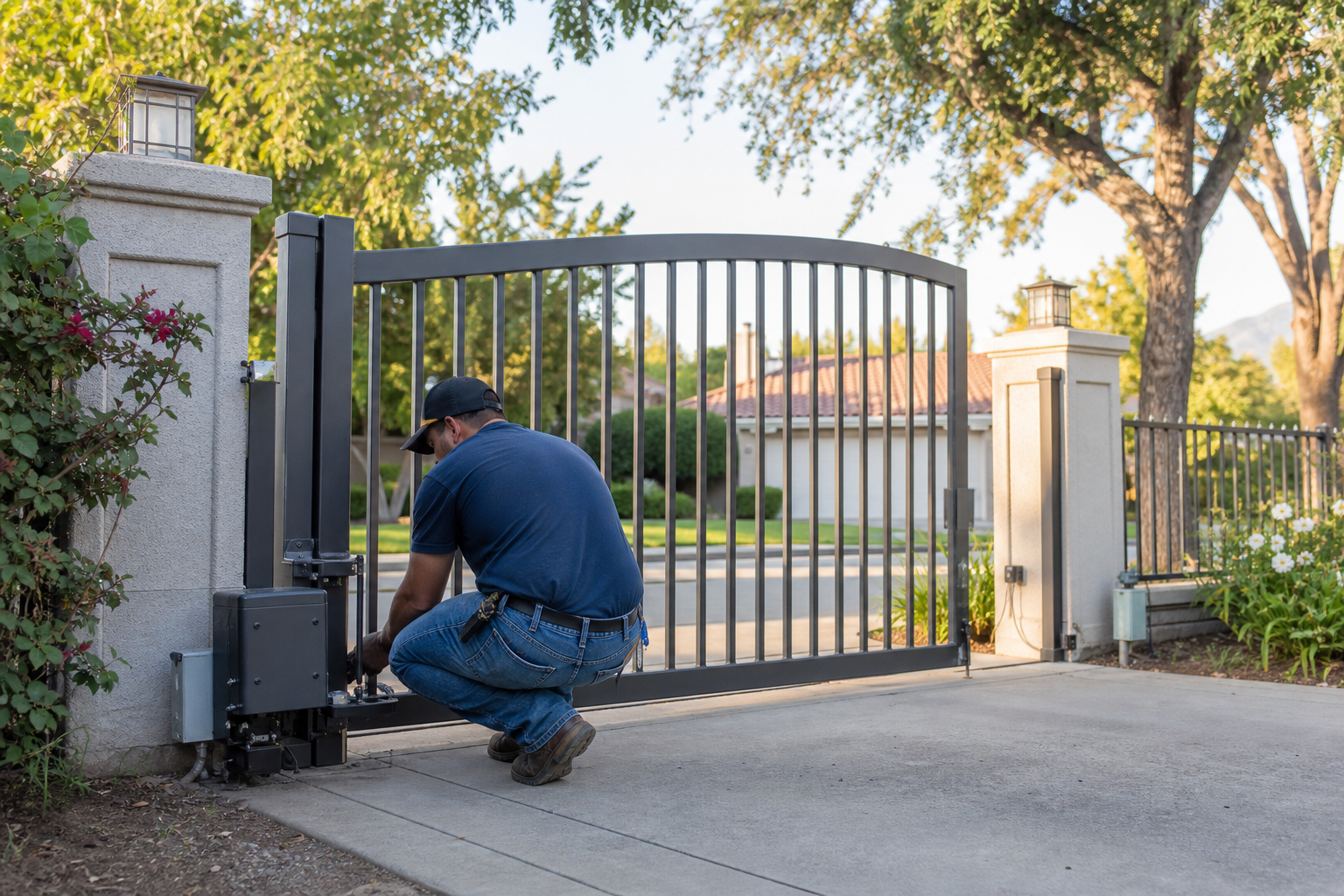
Emergency Gate Repair Near Me: What San Jose Homeowners Should Do First
Before you search “emergency gate repair near me” at 11 p.m. and start calling every number that pops up, run through a five-minute self-check. About 30% of after-hours gate calls we take in San Jose turn out to be a tripped breaker, a dead backup battery, or a remote that fell out of sync — all fixable in under five minutes without a technician. If you’d rather skip the troubleshooting and get straight to help, call Coastal Gate Repair Service San Jose home at (833) 848-0143 for a free estimate.
We’ve been handling gate emergencies across San Jose for 17 years, and we’ve learned that the first 20 minutes after a gate failure determine whether you’re back inside your driveway by midnight or stuck waiting until morning. Here’s what actually works.
The 5-Minute Self-Check: Power, Release, Remote, Sensor
Gate operators fail in predictable patterns, and the order you check them matters. Start with power, because everything downstream depends on it.
Step 1: Verify your power source. Check the dedicated breaker for your gate operator — in San Jose’s older Willow Glen and Rose Garden homes, we see shared garage circuits trip during PG&E brownouts or when a garage refrigerator cycles on. Look for a green LED on the operator control board; no light means no power. If you have a battery backup system (common on newer Linear and DoorKing installations), listen for a beeping low-battery alarm.
Step 2: Locate and test the manual release. Every automatic gate sold in California since 2000 must have a manual release per UL 325 safety standards. On swing gates, it’s usually a keyed bypass or pull-handle on the motor housing. On sliding gates, look for a disengagement lever near the drive gear. Safety note: Release the mechanism with the gate fully stopped — never force it while the motor is actively trying to move the gate. Forcing a stalled Viking or Ghost Controls operator can shear the drive pin and turn a $200 service call into an $800 motor replacement.
Step 3: Re-sync your remote. After power interruptions, especially during San Jose’s spring wind storms that knock branches into lines, remotes can lose pairing. Most operators have a “learn” or “program” button; press it, then press your remote button within 30 seconds. If you have a multi-button remote, test each button individually — we’ve seen homeowners in Almaden Valley assume the whole remote failed when only one button lost programming.
Step 4: Clear and test obstruction sensors. Photo eyes and edge sensors account for roughly 40% of “dead gate” calls we field. Wipe the lenses with a dry cloth — fog from San Jose’s marine layer mornings coats them with enough moisture to break the beam. Check for spider webs, which are absurdly common in the dry creek beds near Silver Creek and Evergreen. Then verify alignment: the sender and receiver LEDs should both glow steady. A blinking pattern usually means misalignment.
If all four checks pass and your gate still won’t move, you’ve got a mechanical or control-board issue that needs professional diagnosis. At least now you can tell the technician exactly what you’ve ruled out.
How to Manually Operate Your Gate Without Damaging Anything
Once you’ve released the operator, you need to move the gate without wrecking the drivetrain or your back. The method depends on your gate type and motor configuration.
Swing gates with articulated arm operators (common on residential installations in Cambrian Park and Los Gatos-adjacent areas): Release the arm at the gate bracket, not the motor. The gate should swing freely on its hinges. If it doesn’t, don’t force it — a binding hinge or settled post will fight you and potentially twist the aluminum arm mount.
Sliding gates with chain or rack drives: Disengage the clutch lever fully. You should feel the gate break free from the drive mechanism. If the gate drags or requires excessive force, the track may be clogged with debris from recent rains or the rollers may be seized. Forcing a 400-pound steel slider off a damaged track can bend the frame — and that’s not a same-day fix.
Underground operators (LiftMaster LA-series, FAAC 770, BFT SUB): These are the trickiest. The manual release is typically a key switch at ground level. Turn it to release the hydraulic or mechanical lock, then push the gate gently. Never use a vehicle to push or pull a gate in manual mode — the underground mechanism isn’t designed for lateral loading, and we’ve replaced $3,200 operators in San Jose’s Almaden Hills because someone tried to “help” with a bumper.
Leave the operator in manual mode until the technician arrives. Re-engaging a hydraulic operator incorrectly can trap air in the system and cause erratic movement.
What to Tell the Dispatcher for Faster, Better Service
When you call for emergency gate repair in San Jose, the information you provide in the first 60 seconds determines whether the right technician shows up with the right parts — or whether you get a general handyman who stares at your operator and calls us anyway.
Here’s what we actually need:
- Gate type and approximate dimensions. “Double swing, 14 feet each leaf, wrought iron” tells us to bring heavy-duty hinge pins and possibly a welder. “Single sliding, 20 feet, aluminum frame” means we check rack gear stock before leaving.
- Operator brand and model if visible. The control board or motor housing usually has a label. “DoorKing 9150” or “Ghost Controls TSS1” lets us pull the correct manual and pack likely failure parts. We work on the brand you already have — no need to replace a functioning operator just because a competitor only services one manufacturer.
- What the gate is doing, not what you think is wrong. “It hums but doesn’t move” suggests a mechanical bind or stripped gear. “Nothing happens, no lights” points to power or control board. “It moves six inches and reverses” is almost always a safety sensor or limit switch issue. Your observation saves 15 minutes of diagnostic time.
- Whether the gate is currently blocking vehicle or pedestrian access. This affects our dispatch priority and whether we bring traffic control equipment for commercial properties near San Jose International or downtown corridors.
We pulled one out of a garage over in Berryessa last month where the homeowner told our dispatcher “the motor’s dead.” Mark Thompson showed up, traced it to a $12 fuse on the transformer secondary, and had it running in 20 minutes. The previous company she’d called had quoted her $1,400 for a “control system replacement” without opening the enclosure. Specific information protects you from that scenario.
Spotting Emergency Repair Scams in San Jose
The “emergency gate repair near me” search results after dark attract operators who specialize in panic, not gates. After 17 years in San Jose, we’ve seen the same patterns repeat.
Red flag: No physical address or verifiable local presence. Legitimate gate specialists service defined territories. If the website lists “Bay Area” generically with no San Jose-specific location, or the dispatcher can’t name a neighborhood they’ve worked in this month, you’re likely talking to a lead-generation service that sells your call to the highest bidder.
Red flag: Immediate pressure for full payment before inspection. We charge for after-hours emergency service — that’s standard — but we diagnose first and present options before any work begins. Any technician who demands $500 “to secure the appointment” at 11 p.m. is running a scam.
Red flag: Inability to name your operator brand. If you say “I have a Viking G-5” and they respond “we work on all brands,” press harder. Ask if they stock Viking gearboxes or if they’ll need to order one. A real specialist knows their inventory. Our in-house parts capability means we can answer that question immediately.
Red flag: The “safety inspection” upsell. This is where a $200 service call becomes a $2,800 “complete system rebuild” at 1 a.m. when you’re vulnerable. Get a second opinion in daylight if the recommended repairs exceed 50% of replacement cost. Our 661 customers and counting include plenty who called us for that second opinion and learned their operator had years of life left.
Real companies don’t chase emergency calls with bait-and-switch tactics. Our 4.8-star average across 661 reviews reflects consistency over time, not exploitation of midnight desperation.
Emergency vs. Next-Day: Making the Right Call
Not every gate failure justifies an after-hours premium. Here’s how to decide without guessing.
Call immediately (emergency): The gate is stuck open and secures a commercial property, multi-family complex, or home with vulnerable access points. The gate is stuck closed and blocks your only vehicle exit, or you’re trapped inside. There’s visible damage to the gate structure that could collapse — a broken weld on a cantilever arm, a cracked support post, or a severed cable on a vertical lift gate. These situations worsen with time and weather.
Can wait until morning: The gate operates manually without safety risk. The failure is isolated to convenience features — remote operation, keypad entry, intercom — but the gate still opens with the manual release. You’ve secured the property temporarily with parking barriers or by parking a vehicle to block the opening. The operator shows error codes that indicate a programming issue, not a mechanical failure.
San Jose’s climate works in your favor here. Unlike the Central Valley, we don’t get hard freezes that seize hydraulic operators overnight. A gate that moves freely in manual mode at 10 p.m. will almost certainly move the same way at 7 a.m. The after-hours premium — typically 1.5x standard rates across the industry — buys you speed, not necessarily a better repair.
When you do need same-night service, Mark Thompson leads every job personally. You’re not getting a subcontractor who’s reading your operator manual for the first time in your driveway.
Related Services in San Jose
If your gate issue turns out to need more than an emergency patch, we handle the full spectrum: Gate Repair in Alum Rock, Gate Installation in Alum Rock, and Gate Motor & Opener in Alum Rock — plus every San Jose neighborhood from Willow Glen to Evergreen. From a broken weld to a full smart-access system, one company handles your entire gate ecosystem.
What happens when you call
- 1
A real person answersNo phone trees — you reach a local pro.
- 2
You get an upfront price rangeHonest numbers before anyone is dispatched.
- 3
A background-checked tech heads outLicensed & insured, dispatched right away.
- 4
You approve before work beginsNothing starts until you say go.
The Bottom Line
Searching “emergency gate repair near me” at midnight puts you at the mercy of whoever bought the most ads. The homeowners who get fastest resolution — whether DIY or professional — run a systematic five-minute check, know how to describe their system accurately, and can distinguish a true emergency from an inconvenient delay. In 17 years of San Jose gate work, we’ve never seen panic produce a better outcome than preparation.
If you’re in San Jose and your gate won’t cooperate after the self-check, Coastal Gate Repair Service San Jose home offers free estimates — call (833) 848-0143. We’ll ask the right questions upfront, dispatch with the right parts, and Mark Thompson will handle the repair himself. No subcontractors, no guesswork, no waiting on third-party welders or parts suppliers.
Frequently Asked Questions
After-hours emergency service typically runs 1.5 times standard rates, with most residential repairs in San Jose falling between $250 and $600 depending on parts needed. A simple limit switch or sensor adjustment might land at the lower end; a failed control board or gearbox replacement pushes toward the higher end. We diagnose first and present exact pricing before any work begins — call (833) 848-0143 for a free estimate.
You can, if you force it while the operator is still engaged or ignore binding in the track or hinges. Always use the manufacturer’s manual release procedure — never bypass it with a vehicle or pry bar. If the gate requires excessive force to move in manual mode, stop and call a professional. Forcing a bound mechanism turns a minor adjustment into structural damage.
Intermittent operation usually signals a failing component that’s sensitive to temperature, vibration, or load. In San Jose, we see this most often with weak batteries in solar-charged systems (common in hillside homes near Almaden Valley), loose wire connections that separate when the gate moves, and photo eyes that misalign slightly in temperature swings. Track the pattern: time of day, weather, and whether the failure happens during opening or closing. That detail shortens diagnostic time significantly.
Replace when repair costs exceed 60% of a new unit installed, parts are obsolete (common on operators over 15 years), or safety standards have changed — pre-2016 operators may lack current entrapment protection required for properties with children. We work on the brand you already have and won’t push replacement when repair is the smarter call. For a straight assessment of your specific operator, call (833) 848-0143 — estimates are free.
Written by Mark Thompson, Owner & Lead Technician at Coastal Gate Repair Service San Jose, serving San Jose since 2009.
Need Gate Repair Help?
Call Coastal Gate Repair Service San Jose — licensed & insured, here with fast after-hours help in San Jose.
(833) 848-0143