


Fast, Reliable Gate Installation Across Stanford
Gate installation in Stanford, CA typically runs $2,800–$7,500 depending on size, material, and automation, with most projects completed in 3–5 business days after Stanford Architectural Review approval. We’re Coastal Gate Repair Service San Jose, and our Gate Installation team knows Stanford’s unique landscape inside out — from the faculty row homes along Campus Drive to the newer infill near Escondido Village. Mark Thompson, our owner and lead technician, has been installing and repairing gates across the Peninsula for 17 years. We carry parts for Viking, Linear, and FAAC systems in our van, which means fewer return trips and faster completion for Stanford properties. Call (833) 848-0143 for a free estimate.
Why Coastal Gate Repair Service San Jose Is Stanford’s Preferred Gate Installation Company
We’ve built a 4.8-star reputation across 661 verified reviews by showing up prepared and finishing what we start. Stanford isn’t a standard city — it’s a privately-owned university enclave where most residential properties sit on Stanford University ground leases. That matters because any gate replacement here must clear Stanford’s Architectural Review process, and we’ve navigated that approval path enough times to know what the review board expects.
Our response time to Stanford averages same-day or next-day, depending on Architectural Review status. We’ve installed gates along Alpine Road, worked on faculty housing off Junipero Serra Boulevard, and replaced corrosion-damaged operators in the 94305 ZIP code where winter rain off the Santa Cruz Mountains hits harder than inland neighbors.
Mark Thompson leads every job personally. You won’t get a subcontractor learning on your dime. That owner-operator model is especially valuable in Stanford, where gate work intersects with university bureaucracy and historic aesthetic requirements that a general handyman simply won’t anticipate.
Our Gate Installation Services in Stanford
Swing Gate Installation
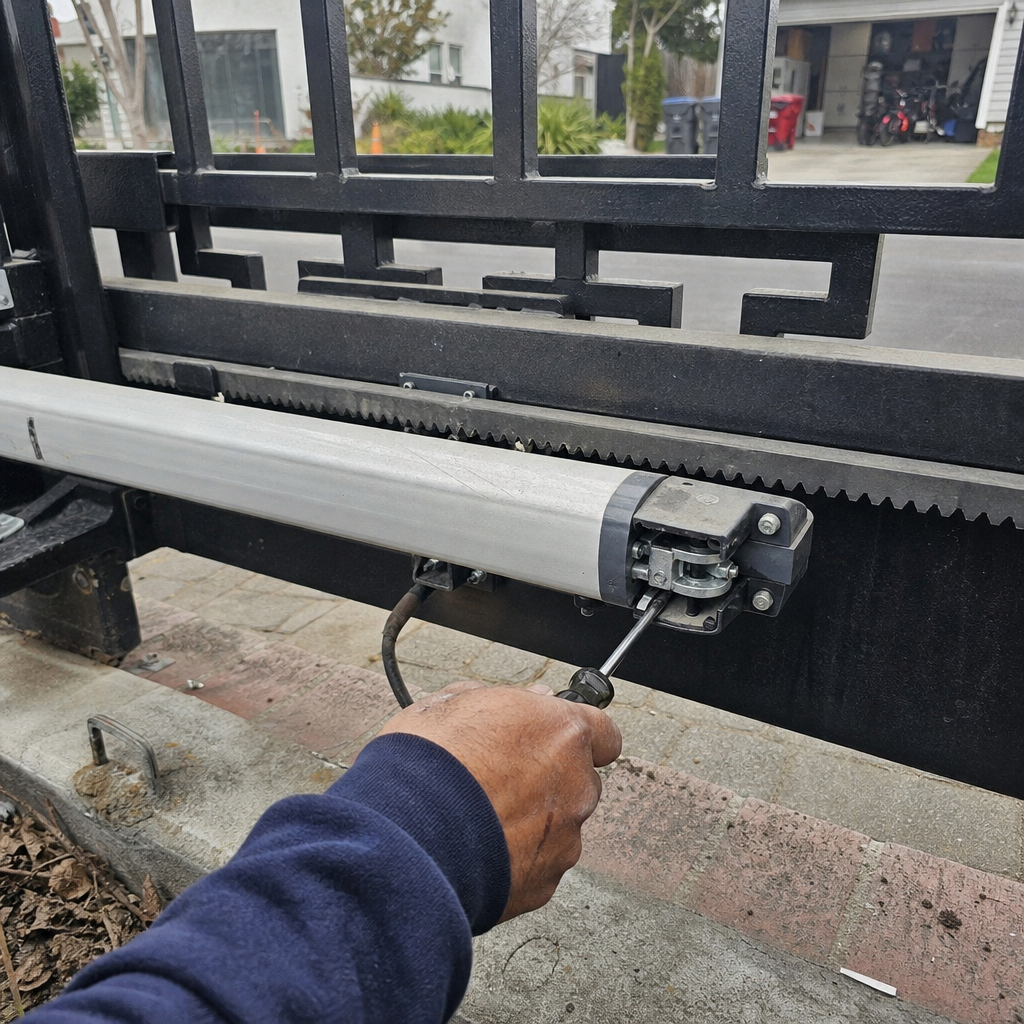
Swing gates dominate Stanford’s faculty housing areas — Escondido Village, the row homes near the Main Quad, and the 1950s–1970s builds along Campus Drive. We install single and double swing configurations, with automation packages from Linear and FAAC that hold up to the campus microclimate. One persistent issue here: deer. Our crew replaced a rusted-out FAAC swing gate operator at a faculty home in Escondido Village. The original opener had seized from winter rain corrosion, and we retrofitted a corrosion-resistant LiftMaster model after obtaining Stanford Architectural Review approval for the new mounting brackets. We now spec marine-grade hardware and elevated sensor mounts as standard for Stanford swing gates near open space.
Sliding Gate Installation
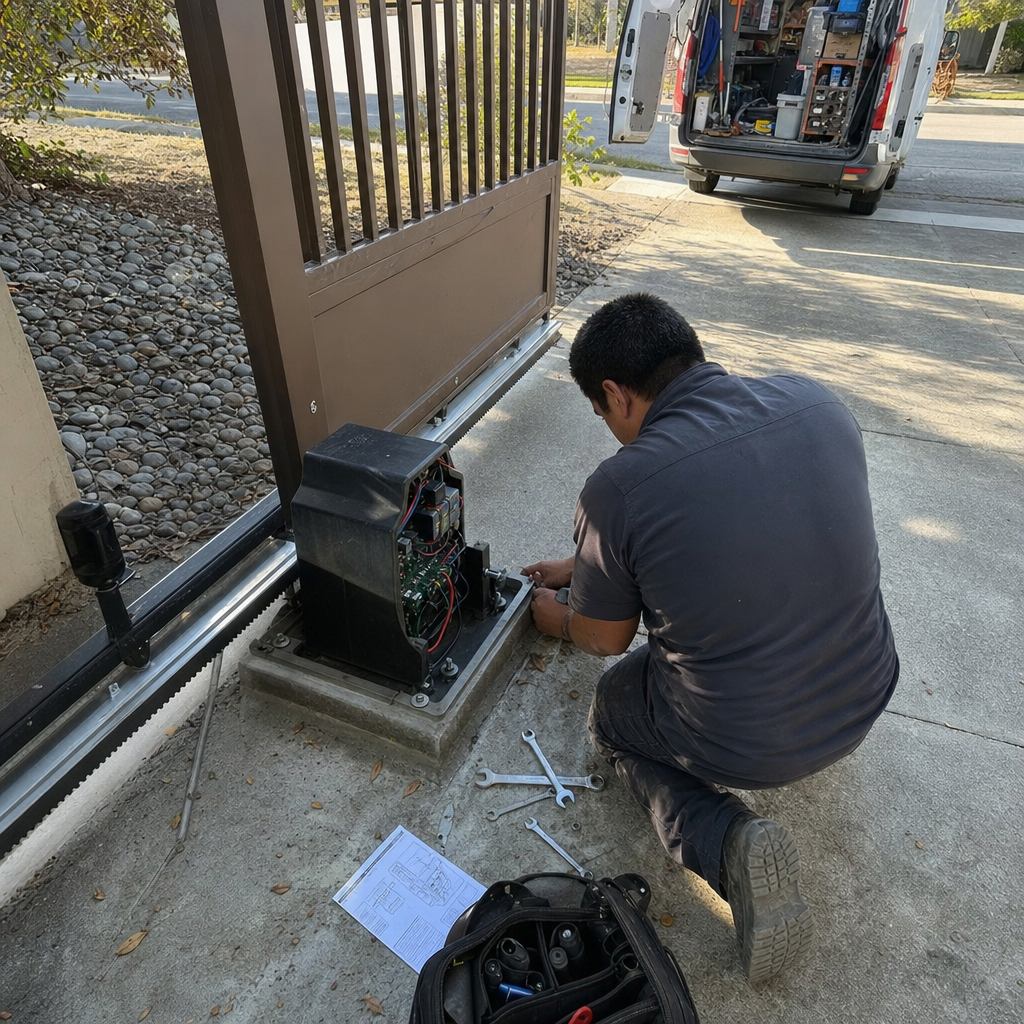
Sliding gates make sense for Stanford properties with steep driveways or limited swing clearance — common in the hillside areas above Sand Hill Road and newer infill with tight setbacks. We fabricate and install cantilever and track-mounted systems, with underground operators from Viking and BFT when the aesthetic demands hidden hardware. The catch in Stanford: that underground placement puts motors in direct contact with the water table that rises dramatically during winter rains funneled off the Santa Cruz Mountains. We install drainage beds and sealed junction boxes as standard, not upsells.
Security Gate Installation
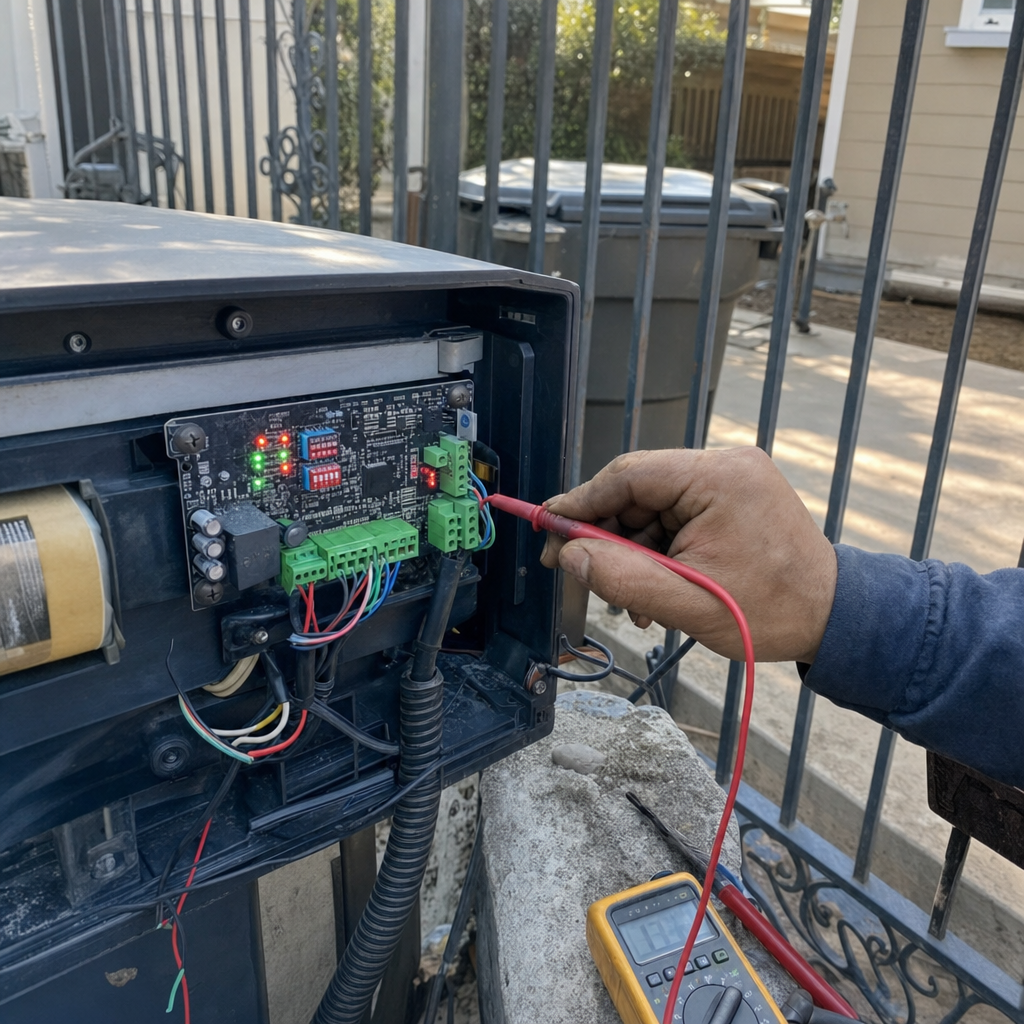
Stanford’s security gate needs split between residential privacy and controlled campus access. We’ve installed keypad and RFID-controlled security gates for faculty housing clusters, research facilities near the Stanford Linear Accelerator, and commercial properties along El Camino Real. Every installation integrates with existing access control or stands alone — your call. We work with DoorKing, Elite, and Mighty Mule for the control side, and fabricate matching ironwork in-house so the security hardware doesn’t look like an afterthought bolted to a historic gate.
Pedestrian Gate Installation
Pedestrian gates in Stanford face the same corrosion pressure as driveway gates, with less material to absorb the punishment. We see a lot of original wrought iron pedestrian gates from the 1960s and 1970s faculty housing waves — beautiful work, but the bottom rails and latch mechanisms have rusted through after decades of fog and rain. We can match original Spanish Colonial scrollwork and Romanesque Revival finials from our in-house welding capability, or source period-appropriate hardware when the original forge has closed.

What happens when you call
- 1
A real person answersNo phone trees — you reach a local pro.
- 2
You get an upfront price rangeHonest numbers before anyone is dispatched.
- 3
A background-checked tech heads outLicensed & insured, dispatched right away.
- 4
You approve before work beginsNothing starts until you say go.
Trusted Brands We Service in Stanford
We stock parts and install new equipment from nine major brands — LiftMaster, FAAC, BFT, Linear, Viking, Ghost Controls, DoorKing, Elite, and Mighty Mule. For Stanford customers, that means we work on the brand you already have, not the one we’re pushing. Our van carries Linear and Viking operator components, FAAC control boards, and BFT hydraulic assemblies, so most Stanford service calls finish in one trip. When a faculty home off Governor’s Avenue needed a rare BFT submersible motor replacement, we had the part in stock and completed the swap before the next rain cycle hit. No outsourcing. No waiting on third-party suppliers.
Common Gate Installation Problems We See in Stanford Homes
- Accelerated corrosion of underground operators. Stanford’s microclimate delivers heavier winter rain and more persistent summer fog than Palo Alto or Los Altos Hills. Underground gate motors in the 94305 area sit in saturated soil for weeks, suffering moisture intrusion failures that simply don’t happen five miles inland. We spec elevated or corrosion-sealed operators for new installations.
- Deer damage to automated swing gates. Deer push through gates in faculty housing areas near open space, bending latch arms, damaging bottom rails, and misaligning safety sensors. We’ve replaced three swing gate arms on Frenchman’s Lane alone after deer encounters. Sensor relocation and reinforced latch hardware solve most repeat issues.
- Parts scarcity for legacy wrought iron gates. The 1950s–1970s faculty housing waves installed ornamental iron chosen to harmonize with Stanford’s sandstone architecture. Original foundries have closed, and matching replacement scrollwork or finials requires custom fabrication. Our in-house welding capability fills that gap without referring you to a metal shop.
- Architectural Review delays for replacements. Stanford’s Architectural Review guidelines mandate ironwork that complements the campus Romanesque Revival aesthetic. A technician who submits generic steel gate specs gets rejected. We know the approval language — “wrought iron with hand-forged detail, earth-tone powder coat” — and spec accordingly from the first drawing.
Pricing for Gate Installation in Stanford, CA
| Service | Typical Range in Stanford |
|---|---|
| Manual pedestrian gate (steel/wrought iron) | $2,800 – $4,200 |
| Manual driveway swing gate | $3,500 – $5,800 |
| Automated single swing gate with operator | $5,200 – $7,500 |
| Sliding gate with track or cantilever | $4,800 – $7,200 |
| Security gate with access control integration | $6,500 – $9,800 |
| Stanford Architectural Review documentation fee | $0 – $350 (we prepare drawings) |
These Stanford ranges reflect material costs for corrosion-resistant hardware, the labor involved in Architectural Review compliance, and our use of marine-grade components standard. Underground operator installations run higher here due to drainage requirements. Double gates, custom scrollwork, or smart access integration add to the upper end. We don’t quote over email without seeing your site — slope, existing post condition, and electrical access all move the number. Call (833) 848-0143 for a free, on-site estimate with exact pricing.
We Also Serve Cities Near Stanford
Our service radius covers the full Peninsula corridor. We regularly install and repair gates in Palo Alto (where building codes differ significantly from Stanford’s university guidelines), Atherton (larger estate properties with longer driveways), East Palo Alto (mixed residential and commercial access control needs), and Los Altos Hills (hillside sliding gates with grade challenges). Each city has its own permitting landscape — we know the difference.
Serving Stanford, CA — Our Local Coverage Area
We’re based in the Stanford area and know this community well. Use the map below to see our service coverage — if you’re nearby, we can almost certainly help.
FAQs — Gate Installation in Stanford
Yes — nearly all Stanford faculty and staff housing sits on university ground leases that require Architectural Review approval for exterior modifications including gate replacement. We prepare the technical drawings and material specifications as part of our installation service, using language the review board expects: wrought iron construction, earth-tone finishes, and hardware that complements the campus Romanesque Revival sandstone aesthetic. The process typically adds 5–10 business days before installation begins. Call (833) 848-0143 and we’ll walk you through the current review timeline.
Yes — deer pushing through gates is a documented failure pattern in Stanford faculty housing near open space, essentially unheard of in neighboring Palo Alto proper. The animals apply lateral force to latch arms and bottom rails, and their bodies trigger false sensor cycles that strain the operator mechanics. We relocate sensors above deer height and spec reinforced latch hardware as standard for affected properties. If you’re on Frenchman’s Lane, Escondido Road, or similar corridors, we’ve likely already solved this exact problem on your block.
Stanford sits in a wetter microclimate that receives heavy winter rain funneled directly off the Santa Cruz Mountains plus persistent summer morning fog from San Francisco Bay. Underground operators and buried junction boxes sit in saturated soil for extended periods, accelerating galvanic corrosion and moisture intrusion failures. Palo Alto, just minutes north, sits slightly inland and higher — drier conditions, fewer corrosion callbacks. We account for this difference by spec’ing sealed marine-grade operators and drainage beds as standard for Stanford installations, not as optional upgrades.
Yes — our in-house welding capability includes custom fabrication of scrollwork, finials, and picket profiles that match the Spanish Colonial and Romanesque Revival ironwork common to Stanford’s mid-century faculty housing. We’ve sourced original patterns from surviving gates in the 94305 area and maintain dies for common profiles. When original foundry hardware is unavailable, we fabricate replacements that satisfy Architectural Review requirements. Bring a photo or we can survey on-site — estimates are free.
For FAAC operators under 12 years old with isolated failures — seized motor, burned control board, damaged limit switch — repair typically runs $680–$1,400 and makes sense. For units showing multiple failure points or corrosion damage from Stanford’s wet microclimate, replacement with a corrosion-resistant LiftMaster or Linear operator at $2,200–$3,800 usually outlasts the repair by years. We assess the housing condition, gear wear, and circuit board corrosion before recommending either path. Call (833) 848-0143 for an exact diagnosis — estimates are free.
Written by Mark Thompson, Owner at Coastal Gate Repair Service San Jose, serving Stanford since 2008.